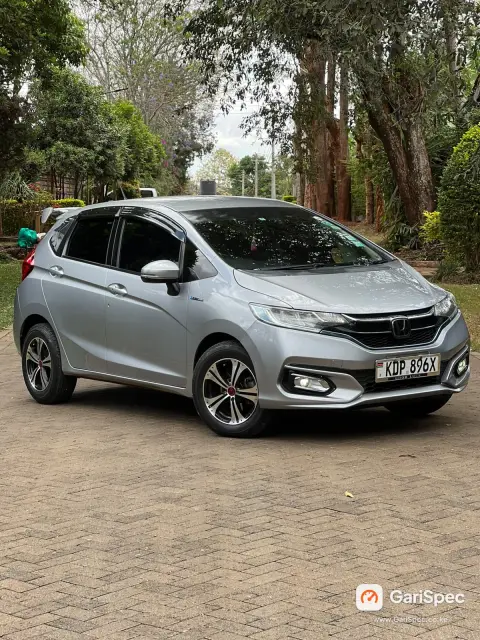
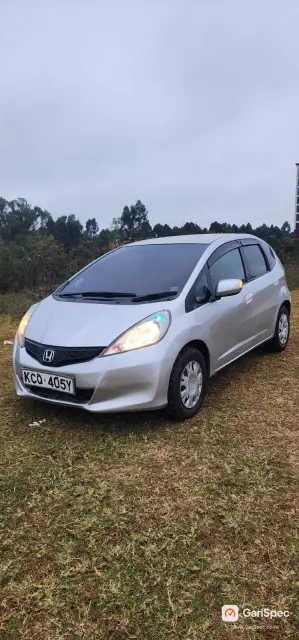
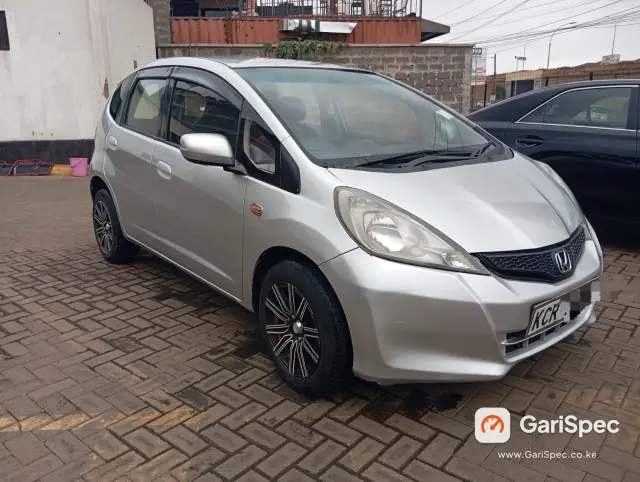
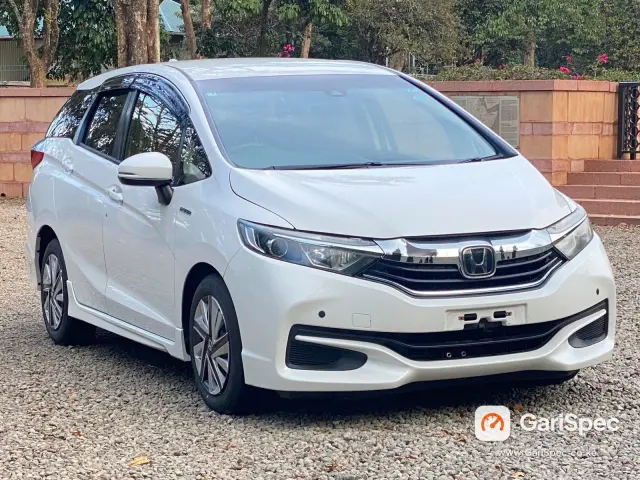
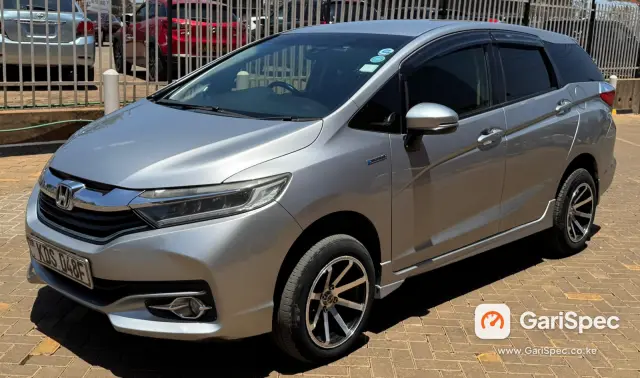
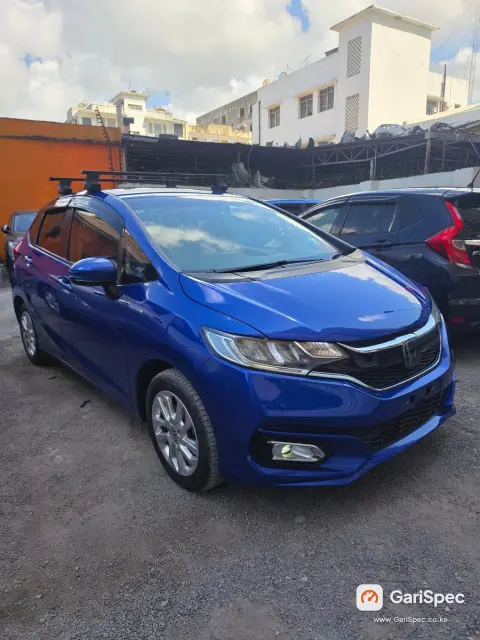
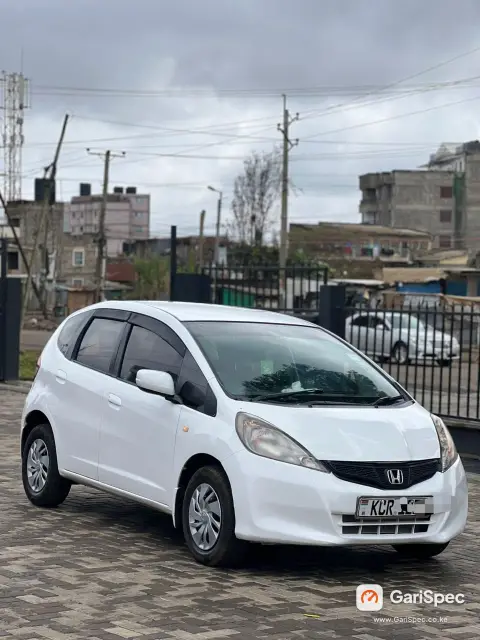
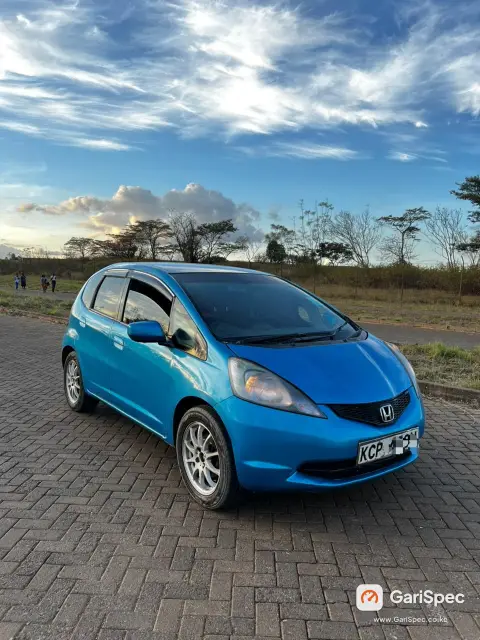
Honda · Hatchback · 2008–2026

Honda Fit specs, prices & reviews in Kenya

Clever 'Magic Seats' and excellent economy in a small footprint.

KES 400K–3.21MPrice in Kenya
97–135 hpPower
14–22 km/LReal-world economy
135–160 mmGround clearance
5Seats
KES 16K+Fuel / month
See 43 Fit for sale
Honda Fit 13G (GK3)Photo: Tokumeigakarinoaoshima · CC0

In short: The Honda Fit (sold elsewhere as the Jazz) is a five-seat supermini famous for its flexible Magic Seats. Kenyan imports are mostly the third generation (GK/GP5, 2013–2020) with a 1.3 or 1.5 i-VTEC petrol or the 1.5 Sport Hybrid, plus the 2020+ fourth generation. Expect 14–16 km/L (hybrid about 20 km/L) and prices of KES 400K–3.21M.

Fit by year

Pick a model year for its exact engines, price and import status.

Honda Fit price in Kenya

Estimated market prices for a duty-paid car in good condition, by year of manufacture. Years marked live use the middle of real GariSpec asking prices.

YearPrice range (KES)Import
2026
KES 2.71M–3.21M
Yes
2025
KES 2.51M–2.97M
Yes
2024
KES 2.32M–2.75M
Yes
2023
KES 2.15M–2.55M
Yes
2022
KES 1.95M–2.3M
Yes
2021
KES 1.75M–2.1M
Yes
2020
KES 1.61M–1.9M
Yes
2019 live
KES 1.61M–1.78M
Yes
2018 live
KES 1.47M–1.74M
Local only
2017 live
KES 1.35M–1.49M
Local only
2016
KES 1.06M–1.25M
Local only
2015 live
KES 1.06M–1.25M
Local only
2014
KES 750K–900K
Local only
2013
KES 660K–790K
Local only
2012
KES 660K–790K
Local only
2011 live
KES 660K–790K
Local only
2010
KES 480K–600K
Local only
2009
KES 440K–550K
Local only
2008
KES 400K–500K
Local only

Live on GariSpec

43 Fit for sale

Recent asking prices on GariSpec range KES 650K–2.09M, typically around KES 1.3M. Every listing shows the real horsepower, torque, clearance and fuel cost — know the car before you buy it.

For sale now on GariSpec

Honda Fit specifications

Every generation sold in Kenya, with engines, gearboxes, dimensions and equipment. Official economy is the manufacturer's JC08/WLTC/NEDC figure; real-world is our estimate for mixed Kenyan driving.

Fourth generation (GR)

2020–present

Softer styling, a wider view out and the smoother two-motor e:HEV hybrid (no dual-clutch gearbox). Honda Sensing is standard.

Honda Fit GR engines and performance
VariantYearsEnginePowerTorqueGearboxDriveOfficialReal-world0–100Top speed
1.3 Basic / Home
GR1
2020–20261.3L I4 L13B
Petrol · 1,317 cc
97 hp
72 kW
118 NmCVTFWD20.2 km/L16 km/L
6.2 L/100 km
—170 km/h
1.5 e:HEV
GR3
2020–20261.5L I4 LEB + 2 motors
Hybrid · 1,496 cc
108 hp
81 kW
253 Nme-CVT (fixed gear)FWD29.4 km/L22 km/L
4.5 L/100 km
—175 km/h

Dimensions & capacities

Length
3,995–4,090 mm
Width
1,695 mm
Height
1,515–1,570 mm
Wheelbase
2,530 mm
Ground clearance
135–160 mm
Fuel tank
36–40 L
Seats
5

Safety

  • Honda Sensing with collision mitigation braking
  • Six airbags

Key features

  • Magic Seats; wide panoramic windscreen
  • Smartphone-connected display audio

Third generation (GK/GP5)

2013–2020Facelift 2017

Launched in September 2013 with Earth Dreams engines and the Sport Hybrid i-DCD with a seven-speed dual-clutch gearbox. Early hybrids had several DCT software recalls; the 2017 facelift added Honda Sensing.

Honda Fit GK/GP5 engines and performance
VariantYearsEnginePowerTorqueGearboxDriveOfficialReal-world0–100Top speed
1.3 13G
GK3
2013–20201.3L I4 L13B i-VTEC
Petrol · 1,317 cc
99 hp
74 kW
119 NmCVTFWD26 km/L16 km/L
6.2 L/100 km
12 s175 km/h
1.5 15XL / RS
GK5
2013–20201.5L I4 L15B i-VTEC
Petrol · 1,496 cc
130 hp
97 kW
155 NmCVT / 6MTFWD22.2 km/L14 km/L
7.1 L/100 km
9.5 s190 km/h
1.5 Hybrid (i-DCD)
GP5
2013–20201.5L I4 LEB + H1 motor
Hybrid · 1,496 cc
135 hp
101 kW
160 Nm7DCTFWD36.4 km/L20 km/L
5.0 L/100 km
9.8 s175 km/h

Dimensions & capacities

Length
3,955–4,045 mm
Width
1,695 mm
Height
1,525–1,550 mm
Wheelbase
2,530 mm
Ground clearance
135–150 mm
Boot space
363 L
Fuel tank
32–40 L
Kerb weight
1,020–1,180 kg
Turning radius
4.7 m
Seats
5

Chassis

Suspension
MacPherson strut front, torsion beam rear
Brakes
Ventilated discs front, drums rear
Steering
Electric power steering
Tyres
175/70 R14, 185/60 R15, 185/55 R16

Year-by-year changes

  • 2013Launched with 1.3 and 1.5 i-VTEC petrol and 1.5 Sport Hybrid i-DCD.
  • 2014Several recalls to update hybrid DCT software.
  • 2017Facelift: Honda Sensing safety suite, LED lights, improved hybrid economy.

Safety

  • Six airbags on many grades
  • VSA stability assist
  • City-Brake Active System (2013–2017) and Honda Sensing (2017+)

Key features

  • Magic Seats (fold flat or flip up)
  • Touch-panel climate control, push start

Second generation (GE/GP1)

2007–2013

The previous Fit, built 2007–2013 with 1.3 and 1.5 i-VTEC engines and, from 2010, an IMA hybrid. Light and economical; bought locally used.

Honda Fit GE engines and performance
VariantYearsEnginePowerTorqueGearboxDriveOfficialReal-world0–100Top speed
1.3 G
GE6
2007–20131.3L I4 L13A i-VTEC
Petrol · 1,339 cc
99 hp
74 kW
127 NmCVTFWD24 km/L15 km/L
6.7 L/100 km
12 s170 km/h
1.3 Hybrid (IMA)
GP1
2010–20131.3L I4 LDA IMA
Hybrid · 1,339 cc
98 hp
73 kW
167 NmCVTFWD30 km/L18 km/L
5.6 L/100 km
12.5 s165 km/h

Dimensions & capacities

Length
3,900–3,920 mm
Width
1,695 mm
Height
1,525 mm
Wheelbase
2,500 mm
Ground clearance
135 mm
Fuel tank
42 L
Seats
5

Safety

  • Dual front airbags
  • ABS with EBD

Key features

  • Magic Seats

Running costs in Kenya

Fuel at EPRA's Nairobi pump prices (15 Oct – 14 Nov 2026): petrol KES 226.96, diesel KES 227.76 a litre.

1.3 G (15 km/L)KES 22,700
1.3 Hybrid (IMA) (18 km/L)KES 18,900
1.3 13G (16 km/L)KES 21,300
1.5 15XL / RS (14 km/L)KES 24,300
1.5 Hybrid (i-DCD) (20 km/L)KES 17,000
1.3 Basic / Home (16 km/L)KES 21,300
1.5 e:HEV (22 km/L)KES 15,500

Per month at real-world economy. Drag to match your driving.

Minor service (oil, filters)
KES 5K–9K
Major service
KES 15K–28K
Parts costs
Medium
Comprehensive insurance (2026 car)
≈ KES 118,500 / year
Fuel cost per km (best variant)
KES 10.3

Petrol parts are easy to find; hybrid DCT and battery work needs a Honda specialist. Insurance is estimated at 4.0% of value; quotes vary by insurer and driver.

Maintenance schedule

ItemEveryTypical cost
Engine oil and filter (0W-20, about 3.4 L)5,000–7,500 kmKES 4K–7K
CVT fluid (Honda HCF-2) — petrol40,000 kmKES 8K–13K
DCT fluid — hybrid40,000–60,000 kmKES 8K–14K
Spark plugs100,000 kmKES 4K–8K
Front brake pads30,000–40,000 kmKES 4K–8K

Independent-garage prices in Nairobi including parts; franchise dealers charge more. Shorten intervals on dusty or murram roads.

Common problems & what to check

Hybrid DCT jerks (2013–2016)KES 15K–120K

The i-DCD seven-speed dual-clutch can jerk or clunk at walking pace; check all software updates were done and test in traffic.

Hybrid battery (IPU) coolingKES 3K–90K

Dust-clogged battery cooling fans shorten hybrid battery life.

CVT judder (petrol)KES 8K–100K

As with all CVTs, old fluid causes judder; Honda's HCF-2 fluid is required.

AC compressor clutchKES 6K–35K

Weak AC on hot days can be a failing compressor clutch or a low charge.

Before you buy a Fit

  1. Hybrid: drive in stop-go traffic and park on a slope — the DCT should not clunk or shudder
  2. Fold and flip the Magic Seats to check the mechanisms
  3. Confirm petrol (GK) or hybrid (GP5) from the chassis code
  4. Check the front underside for scrapes

Decode the chassis number free with GariCheck and run an NTSA search on eCitizen before paying.

Verdict

7.0

CarSpecs score 7.0/10

Weighted for Kenyan ownership: reliability, parts, economy and resale count most.

The Fit is the most practical small car you can buy: fold or flip the rear seats and it carries things a Vitz can't. The petrol versions are simple and dependable; the 2013–2015 hybrid's dual-clutch gearbox can be jerky, so test it in traffic.

First carTown drivingUber & BoltFuel saver
Reliability8/10
Fuel economy9/10
Comfort6/10
Performance5/10
Space & practicality7/10
Rough roads3/10
Parts & repairs7/10
Resale value8/10
Safety7/10

Pros

  • Magic Seats fold flat or flip up for tall loads
  • Roomy cabin and 363 L boot for its size
  • Hybrid returns about 20 km/L in real driving
  • Rev-happy, reliable i-VTEC petrol engines

Cons

  • Early hybrid DCT can jerk at low speed
  • Low clearance for rough roads
  • Firm ride on broken tarmac

Honda Fit owner reviews

Be the first to review the Honda Fit

Own one, or owned one before? Your honest experience — fuel, repairs, comfort on Kenyan roads — helps thousands of buyers decide. Every review is read by a person before it is published, and we only show your first name and town.

Write a review

Overall rating
Would you recommend it?

By posting you agree to our terms. We publish your first name and town only, and remove reviews that are fake, abusive or written by sellers.

Honda Fit FAQs

What is the fuel consumption of a Honda Fit?

About 16 km/L for the 1.3 petrol, 14 km/L for the 1.5 and about 20 km/L for the hybrid in real driving. 1,500 km a month costs about KES 21,300 in a 1.3.

Is the Honda Fit Hybrid reliable?

Generally yes, but 2013–2015 hybrids had dual-clutch gearbox issues fixed by software recalls. Buy one whose updates are done and that drives smoothly in traffic, or choose the 2020+ e:HEV, which has no dual-clutch.

Fit or Vitz?

The Fit is roomier and more flexible thanks to Magic Seats; the Vitz is simpler, cheaper to fix and resells faster.

Alternatives to the Fit

Specifications are compiled from manufacturer data with AI assistance and cross-checked against GariSpec's spec library; real-world economy, prices and scores are CarSpecs estimates. Last updated 2026-11-28. How our data works.

Spotted an error in these specs? Tell us
Compare