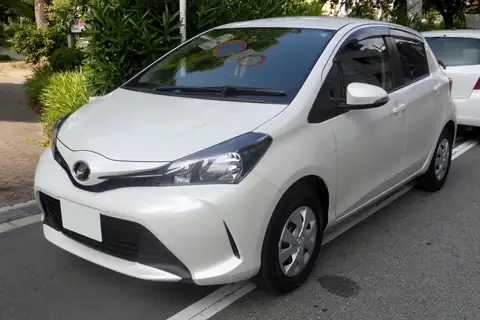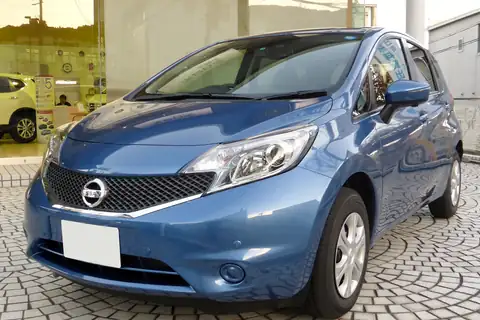
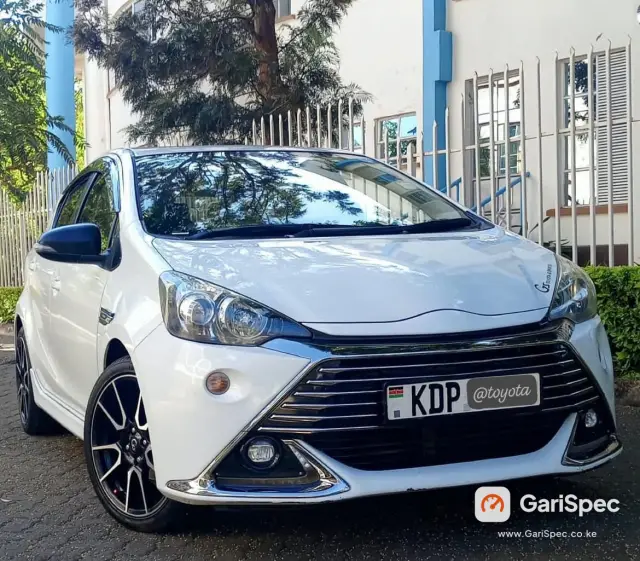
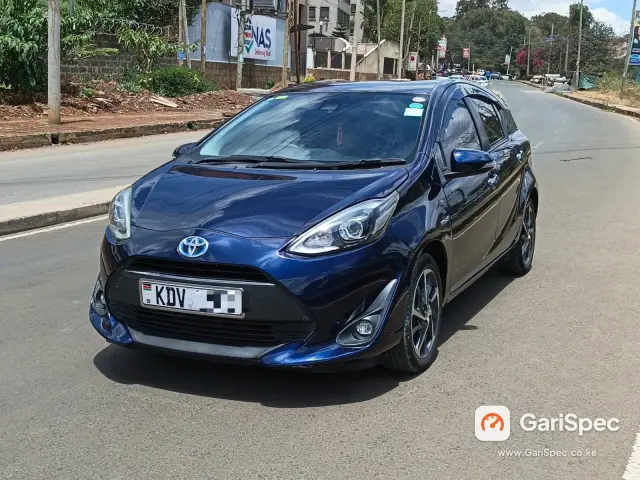
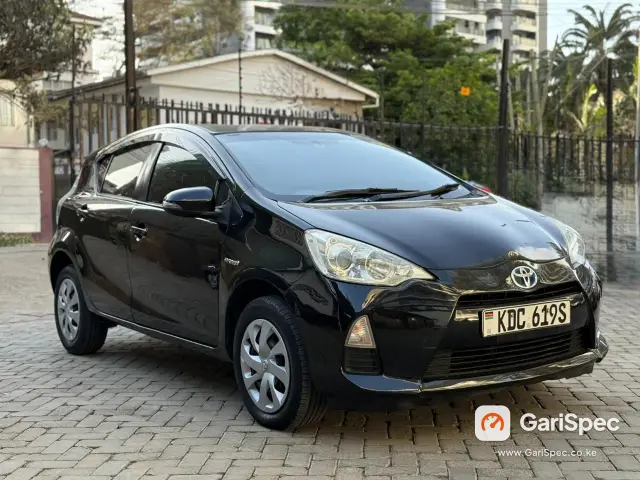
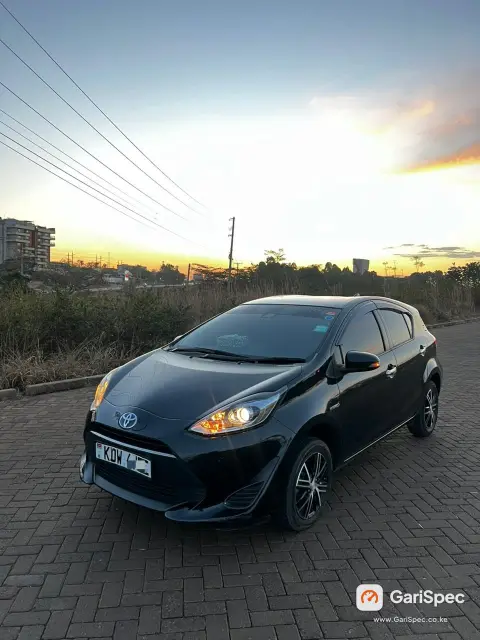
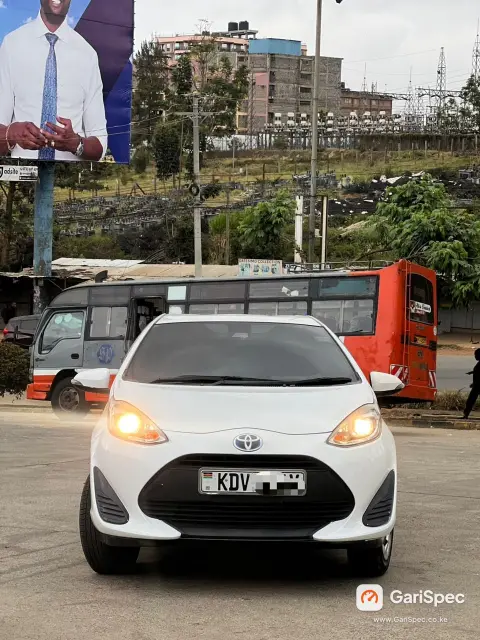
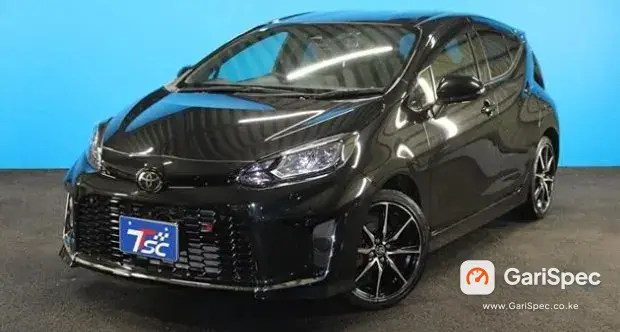
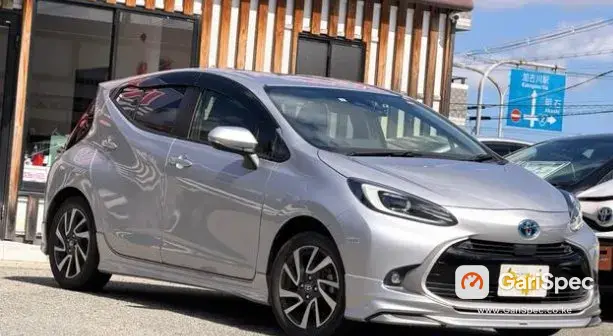
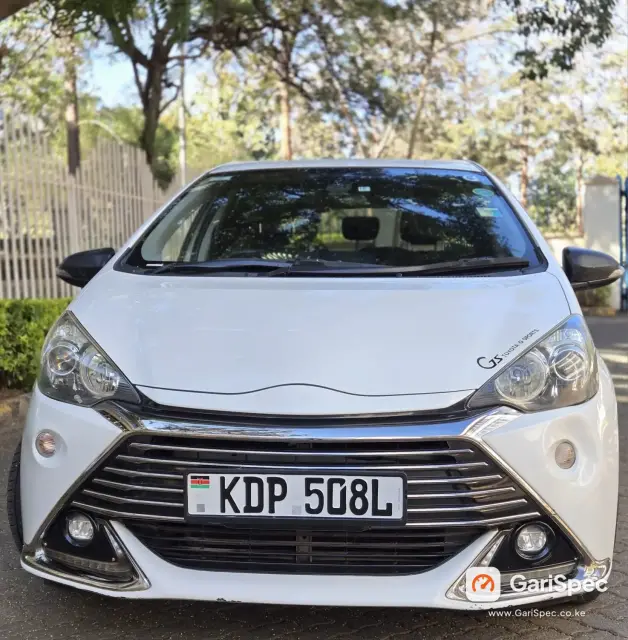
Toyota · Hatchback · 2011–2026

Toyota Aqua specs, prices & reviews in Kenya

The hybrid that made 22 km/L normal in Nairobi traffic.

KES 540K–3.72MPrice in Kenya
99–114 hpPower
21–25 km/LReal-world economy
140–170 mmGround clearance
5Seats
KES 14K+Fuel / month
See 11 Aqua for sale
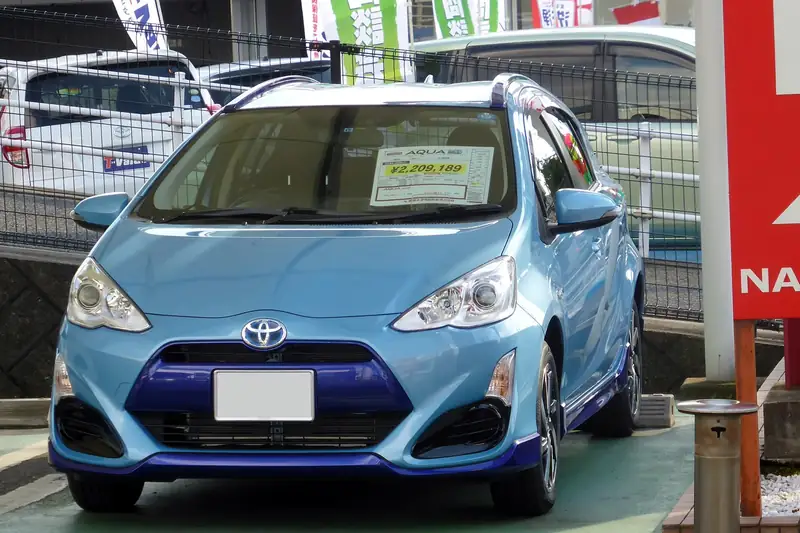
Toyota Aqua X-Urban (NHP10)Photo: Tokumeigakarinoaoshima · CC0

In short: The Toyota Aqua (NHP10, 2011–2021; MXPK10 from 2021) is a five-door hybrid hatchback built around the 1NZ-FXE hybrid system, sold internationally as the Prius C. It averages about 21–23 km/L in real Kenyan driving — the best of any common small car — and costs KES 540K–3.72M depending on year.

Aqua by year

Pick a model year for its exact engines, price and import status.

Toyota Aqua price in Kenya

Estimated market prices for a duty-paid car in good condition, by year of manufacture.

YearPrice range (KES)Import
2026
KES 3.15M–3.72M
Yes
2025
KES 2.92M–3.44M
Yes
2024
KES 2.7M–3.19M
Yes
2023
KES 2.5M–2.95M
Yes
2022
KES 2.25M–2.7M
Yes
2021
KES 1.5M–2.45M
Yes
2020
KES 1.32M–1.55M
Yes
2019
KES 1.2M–1.4M
Yes
2018
KES 1.08M–1.27M
Local only
2017
KES 980K–1.15M
Local only
2016
KES 880K–1.03M
Local only
2015
KES 800K–950K
Local only
2014
KES 720K–860K
Local only
2013
KES 660K–800K
Local only
2012
KES 600K–740K
Local only
2011
KES 540K–670K
Local only

Live on GariSpec

11 Aqua for sale

Recent asking prices on GariSpec range KES 880K–2.28M, typically around KES 1.39M. Every listing shows the real horsepower, torque, clearance and fuel cost — know the car before you buy it.

For sale now on GariSpec

Toyota Aqua specifications

Every generation sold in Kenya, with engines, gearboxes, dimensions and equipment. Official economy is the manufacturer's JC08/WLTC/NEDC figure; real-world is our estimate for mixed Kenyan driving.

Second generation (MXPK10)

2021–present

All-new Aqua on the TNGA-B platform with a three-cylinder M15A-FXE hybrid and a high-output bipolar nickel-metal hydride battery. Roomier, quicker and even more economical; importable to Kenya for years to come.

Toyota Aqua MXPK10 engines and performance
VariantYearsEnginePowerTorqueGearboxDriveOfficialReal-world0–100Top speed
1.5 Hybrid
MXPK10
2021–20261.5L I3 M15A-FXE + motor
Hybrid · 1,490 cc
114 hp
85 kW
141 Nme-CVTFWD35.8 km/L25 km/L
4.0 L/100 km
10 s170 km/h

Dimensions & capacities

Length
4,050 mm
Width
1,695 mm
Height
1,485 mm
Wheelbase
2,600 mm
Seats
5

Chassis

Suspension
MacPherson strut front, torsion beam rear
Brakes
Ventilated discs front, drums rear
Steering
Electric power steering

Year-by-year changes

  • 2021Launched in July 2021 with a 3-cylinder 1.5 hybrid and bipolar NiMH battery.

Safety

  • Toyota Safety Sense with pre-collision braking (pedestrian and cyclist detection)
  • Lane tracing assist and adaptive cruise control on higher grades
  • Front, side and curtain airbags

Key features

  • Power+ mode for brisker acceleration
  • Up to 1,500 W AC power outlet on some grades
  • Smartphone-connected display audio

First generation (NHP10)

2011–2021Facelift 2014Facelift 2017

Launched in December 2011 as Japan's best-selling car for several years. It shares its 1.5 hybrid system with the Prius C and Vitz Hybrid. The 2017 facelift added the raised Crossover model with 170 mm of clearance.

Toyota Aqua NHP10 engines and performance
VariantYearsEnginePowerTorqueGearboxDriveOfficialReal-world0–100Top speed
1.5 Hybrid
NHP10
2011–20211.5L I4 1NZ-FXE + motor
Hybrid · 1,496 cc
99 hp
74 kW
169 Nme-CVTFWD37 km/L22 km/L
4.5 L/100 km
11 s170 km/h
1.5 Hybrid Crossover
NHP10
2017–20211.5L I4 1NZ-FXE + motor
Hybrid · 1,496 cc
99 hp
74 kW
169 Nme-CVTFWD34.4 km/L21 km/L
4.8 L/100 km
11.3 s170 km/h

Dimensions & capacities

Length
3,995–4,050 mm
Width
1,695–1,715 mm
Height
1,445–1,490 mm
Wheelbase
2,550 mm
Ground clearance
140–170 mm
Boot space
305 L
Fuel tank
36 L
Kerb weight
1,050–1,110 kg
Turning radius
4.8 m
Seats
5

Chassis

Suspension
MacPherson strut front, torsion beam rear
Brakes
Ventilated discs front, drums rear, with regenerative braking
Steering
Electric power steering
Tyres
165/70 R14, 175/65 R15, 175/60 R16

Year-by-year changes

  • 2013Fuel economy improved to JC08 37.0 km/L on the L grade.
  • 2014Minor facelift and the sporty G's grade added.
  • 2017Major facelift: new nose, Crossover model with 170 mm clearance, Toyota Safety Sense C on most grades.
  • 2021Replaced mid-year by the second-generation Aqua.

Safety

  • Dual front airbags; side and curtain airbags on higher grades
  • ABS with EBD and brake assist; VSC on most grades
  • Toyota Safety Sense C from 2017 (most grades): pre-collision braking, lane departure alert

Key features

  • EV, Eco and Power drive modes
  • Push-button start and smart entry
  • Automatic climate control with electric AC compressor
  • Hybrid system indicator to coach economical driving

Running costs in Kenya

Fuel at EPRA's Nairobi pump prices (15 Oct – 14 Nov 2026): petrol KES 226.96, diesel KES 227.76 a litre.

1.5 Hybrid (22 km/L)KES 15,500
1.5 Hybrid Crossover (21 km/L)KES 16,200
1.5 Hybrid (25 km/L)KES 13,600

Per month at real-world economy. Drag to match your driving.

Minor service (oil, filters)
KES 6K–10K
Major service
KES 16K–30K
Parts costs
Low
Comprehensive insurance (2026 car)
≈ KES 137,500 / year
Fuel cost per km (best variant)
KES 9.1

Hybrid-specialist garages are common in Nairobi; reconditioned battery packs are widely available. Insurance is estimated at 4.0% of value; quotes vary by insurer and driver.

Maintenance schedule

ItemEveryTypical cost
Engine oil and filter (0W-20 synthetic, about 3.7 L)5,000–7,500 kmKES 4K–7K
Hybrid battery fan filter clean10,000 kmKES 500–2K
Air filter and cabin filter10,000 kmKES 2K–3K
Spark plugs (iridium)100,000 kmKES 4K–7K
Hybrid transaxle fluid (Toyota WS)80,000 kmKES 5K–9K
Engine and inverter coolant4–5 yearsKES 4K–7K

Independent-garage prices in Nairobi including parts; franchise dealers charge more. Shorten intervals on dusty or murram roads.

Common problems & what to check

Hybrid battery degradationKES 60K–180K

On 10+ year-old cars the NiMH pack loses capacity: the engine runs constantly, the battery gauge swings and a hybrid warning may appear.

Clogged battery cooling fanKES 2K–4K

The hybrid battery fan and filter under the rear seat clog with dust, overheating the pack and shortening its life. Clean it every service.

Inverter coolant pump failureKES 8K–18K

A failed inverter pump triggers overheating warnings and limp mode. Check the inverter coolant is circulating.

EGR carbon build-upKES 5K–12K

High-mileage 1NZ-FXE engines can clog the EGR valve and cooler, causing rough running and knocking.

Weak 12 V batteryKES 9K–16K

A tired 12 V auxiliary battery stops the car going into READY mode and causes odd warning lights.

Before you buy a Aqua

  1. The READY light should come on promptly and the car should move off silently in EV mode
  2. Do a hybrid battery health check with an OBD scanner (block voltages within about 0.3 V of each other)
  3. Remove the rear seat cover and inspect the battery fan filter for dust
  4. Listen for the inverter pump and check there are no hybrid or VSC warnings
  5. Check under the front for scrapes — 140 mm is very low for Kenyan speed bumps

Decode the chassis number free with GariCheck and run an NTSA search on eCitizen before paying.

Verdict

6.9

CarSpecs score 6.9/10

Weighted for Kenyan ownership: reliability, parts, economy and resale count most.

If most of your driving is stop-go traffic, the Aqua is the cheapest car to fuel that you can easily buy and fix in Kenya. The low 140 mm clearance and the age of many hybrid batteries are the catches: get a battery health check, and budget for a reconditioned pack on older cars.

Town drivingUber & BoltFuel saverFirst car
Reliability8/10
Fuel economy10/10
Comfort5/10
Performance4/10
Space & practicality5/10
Rough roads2/10
Parts & repairs9/10
Resale value8/10
Safety6/10

Pros

  • Real-world economy of 21–23 km/L — about half the fuel bill of a 1.8 saloon
  • Proven Toyota hybrid system that mechanics now understand well
  • Smooth, quiet and automatic by design (e-CVT)
  • Regenerative braking means brake pads last a long time

Cons

  • Low ground clearance (140 mm) scrapes on speed bumps
  • Hybrid batteries on 10+ year-old cars may need replacing
  • Firm ride and road noise on rough tarmac
  • Rear headroom is tight for tall adults

Toyota Aqua owner reviews

Be the first to review the Toyota Aqua

Own one, or owned one before? Your honest experience — fuel, repairs, comfort on Kenyan roads — helps thousands of buyers decide. Every review is read by a person before it is published, and we only show your first name and town.

Write a review

Overall rating
Would you recommend it?

By posting you agree to our terms. We publish your first name and town only, and remove reviews that are fake, abusive or written by sellers.

Toyota Aqua FAQs

What is the fuel consumption of a Toyota Aqua in Kenya?

Most owners get 21–23 km/L in mixed Nairobi driving, and up to 25 km/L on gentle highway runs. At KES 226.96 a litre, 1,500 km a month costs about KES 15,500 — roughly half the fuel bill of a 1.8 saloon.

How long does a Toyota Aqua hybrid battery last?

Typically 8–15 years or 150,000–250,000 km, depending on heat, dust and how well the cooling fan is kept clean. A reconditioned pack costs about KES 60,000–110,000 fitted; a new one considerably more.

Is the Toyota Aqua good for Uber and Bolt?

Yes — its fuel economy makes it one of the most profitable ride-hailing cars, as long as the hybrid battery is healthy. The rear seat is tighter than an Axio's, so it suits Bolt Lite more than comfort categories.

How much is a Toyota Aqua in Kenya?

Expect KES 540K–3.72M depending on year. A 2017 facelift car typically costs KES 980K–1.15M; the second-generation 2021+ Aqua starts around KES 2.25M–2.7M.

Alternatives to the Aqua

Specifications are compiled from manufacturer data with AI assistance and cross-checked against GariSpec's spec library; real-world economy, prices and scores are CarSpecs estimates. Last updated 2026-11-28. How our data works.

Spotted an error in these specs? Tell us
Compare